

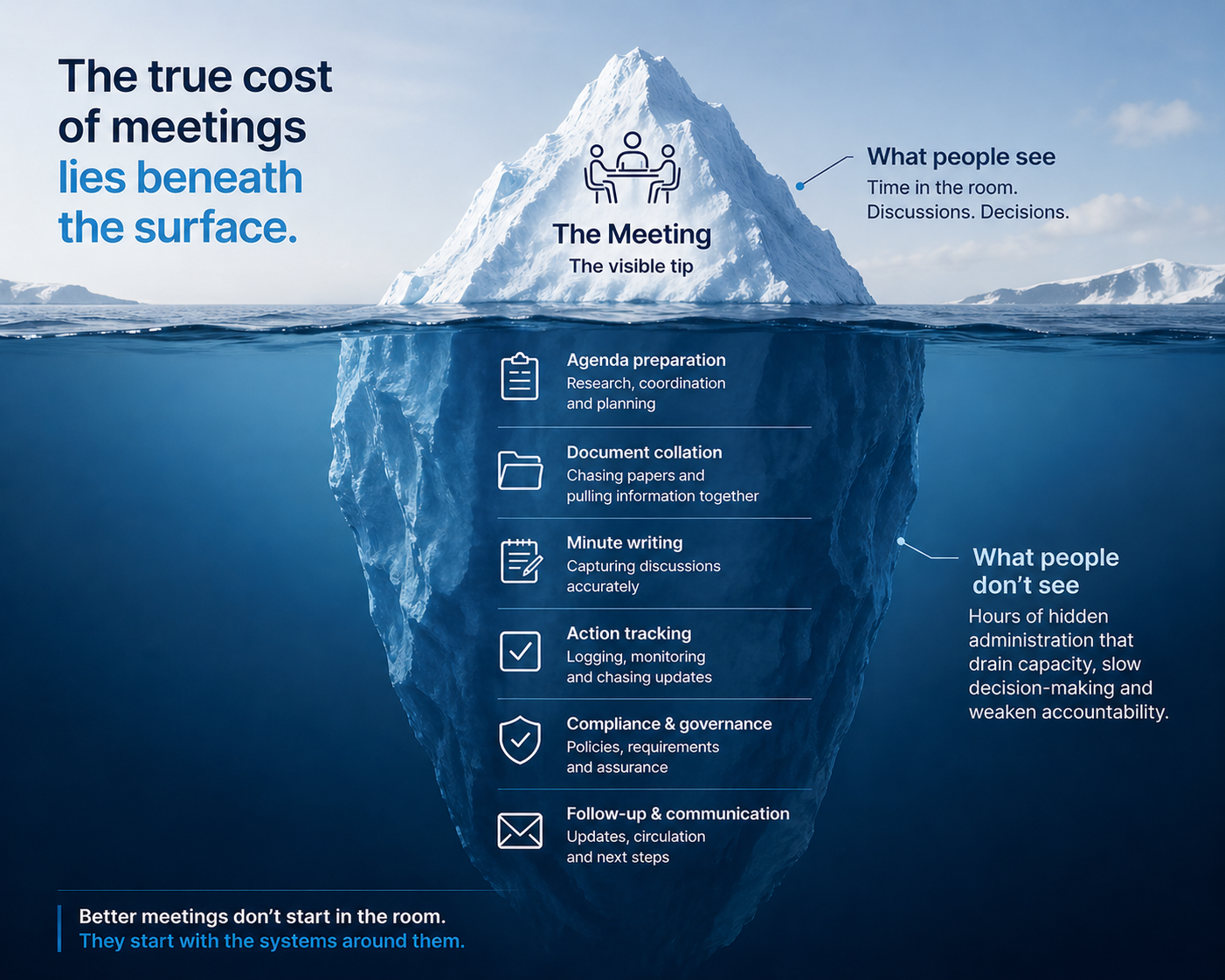
For many schools and trusts, the true cost of meetings extends far beyond time spent around the table. Agenda preparation, document collation, minute writing, action tracking and meeting follow-up can quietly consume far more capacity than the meeting itself. Like an iceberg, the meeting is only the visible tip, while the larger administrative burden beneath the surface can drain leadership time, slow decision-making, and weaken accountability.
By improving the systems surrounding meetings and not just the meetings themselves trusts can reduce operational overload, strengthen governance and create more space for strategic leadership that drives trust-wide improvement.

Related Posts
How MATs Can Navigate the New DfE Supply Framework
This article from our regional partner Supporting Education Group provides…



How LGfL’s Filtering & Monitoring Measure Up to Updated UKSIC Definitions
Ensure your trust's filtering, AI controls, and active monitoring remain fully…
Overcoming the barrier of workload when introducing metacognition
Research shows that metacognition can support improved student attainment, but…